ZTL in Italy: Understanding Limited Traffic Zones
If you’ve ever driven through the center of an Italian city like Milan or Rome, you’ve probably come across the term ZTL - short for Zona a Traffico Limitato (in Italian), or a limited traffic zone. These areas are common across Italy and are designed to protect historic and city centers from congestion and pollution by limiting access to certain vehicles.

This guide explains how Italian ZTLs work, where they are located, and what every driver should know before entering one, with examples from major Italian cities like Milan, Rome, Florence and Bologna.
What Is a ZTL?
A ZTL (Zona a Traffico Limitato) is a restricted area designed to reduce congestion and pollution in Italian city centers. In most cities, access is limited to residents, taxis, delivery vehicles, or electric cars during the zone's active hours. Unauthorized entry is monitored by cameras and leads to an automatic fine.
However, not all ZTLs work in exactly the same way. For example, Milan’s Area C is a special form of ZTL that allows most vehicles to enter after paying an entry fee for Area C instead of requiring a permit. It combines the goals of a restricted traffic zone with those of a congestion charge, aiming to reduce both traffic and emissions within the city’s historic center.
When Are ZTLs Active?
Each city sets its own schedule for its limited traffic zones.
- In Milan, Area C is normally active from Monday to Friday, 7:30 a.m. to 7:30 p.m.
- In Rome, many zones are usually active Monday to Saturday, with additional night restrictions in popular nightlife areas.
- Florence activates its ZTLs from Monday to Friday during daytime hours, often extending into weekends in summer.
It’s essential to check the exact hours before driving, as they can change for holidays, weekends, or events.
How to Recognize a ZTL
ZTL entry points are always clearly marked, but they can be easy to miss if you’re not used to Italian road signs. For most visitors, these signs are unfamiliar and can blend in with other traffic symbols, which is why they often go unnoticed. A typical setup - like this example from Rome’s ZTL A1 zone - includes both a fixed sign and an electronic display mounted on a pole or nearby wall.
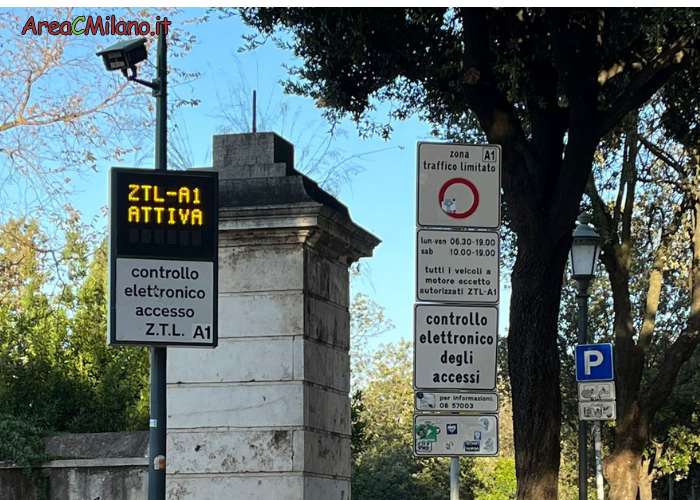
The fixed sign usually features:
- A white background with a red circle in the center (no car symbol inside)
- The words “Zona Traffico Limitato” (limited traffic zone)
- The zone code (for example, A1 or Trastevere in Rome)
- Details about active hours and days (e.g., Mon–Fri 06:30-19:00; Sat 10:00-19:00)
- Notes on who can enter, in this case “tutti i veicoli a motore eccetto autorizzati” - meaning that only authorized vehicles are allowed to enter.
Next to it, you’ll see an electronic display board showing the zone’s current status:
- “VARCO ATTIVO” (or simply ATTIVA, as shown in the photo) means the ZTL is active - entry is restricted, and unauthorized vehicles will be fined.
- “VARCO NON ATTIVO” means the ZTL is not active - entry is allowed for everyone.
Above or nearby, a camera continuously monitors vehicles entering the zone. The system automatically records license plates to issue fines to unauthorized drivers.
Because these signs often appear at the entrance to narrow streets or near old city gates, it’s best to slow down and check both the fixed sign and the electronic board carefully before entering. Even a short or accidental entry when the display shows “ATTIVA” can lead to a fine.
In addition to these main entry points, you might also come across directional ZTL warning signs, like the one found on Via del Corso in Rome. These signs don’t mark the start of the restricted area but indicate where the ZTL begins relative to your position.
For example, an arrow pointing right toward a ZTL symbol means that turning right would take you into the restricted zone, while continuing straight ahead would remain outside it.
How to Access a ZTL Legally
If you plan to drive in one or more Italian cities, it’s a good idea to check the specific ZTL regulations for each destination in advance.
You can find all the details in our city-by-city guides, which explain how each zone works, its active hours, and how to request access or pay an entry ticket.
If you’re staying in the city center or historic center of a major Italian city, it’s always best to contact the hotel in advance before arriving by car. The staff can tell you whether your route crosses a ZTL and, if necessary, register your license plate with the local authorities to prevent fines. Many cities allow temporary access for hotel guests, so you can enter the restricted area legally for check-in, unloading or even parking.
In some cases, you can also enter ZTLs with special permits (for example, for electric vehicles) or by paying an access ticket, like Milan’s Area C. Always check the local website or municipal portal before traveling.
Of course, this information only matters if you plan to drive in these city centers. If you’re getting around by public transport like the metro or tram, or on foot, you can simply enjoy your visit without worrying about ZTL restrictions.
Fines for Unauthorized Entry
All ZTLs in Italy are monitored by automatic cameras that record license plates as vehicles pass through the entry gates. If a vehicle enters during restricted hours without authorization, the system automatically issues a fine.
If you’re driving a rental car, the fine will be sent to the rental company first, which will then forward it to you and may charge an additional administrative fee. Each unauthorized entry counts as a separate violation, so driving in and out of the same zone multiple times in one day can result in more than one fine.
Main ZTLs in Major Italian Cities
Now that you know the key aspects of how ZTLs work, let’s take a quick look at the major restricted zones across Italy’s biggest cities. Each one has its own rules, hours, and types of restrictions, so it’s important to know what applies where you plan to drive.
Milan - Area C and Area B

Milan has two main restricted zones. Area C covers the historic center within the Cerchia dei Bastioni and operates Monday to Friday, 7:30 a.m. to 7:30 p.m. Most vehicles can enter after paying the Area C charge, while older and more polluting vehicles (like petrol Euro 0–2 and diesel Euro 0–4) are banned entirely. Electric vehicles enter for free, and so do hybrid cars with CO2 emissions up to 100 g/km. Residents of the area get 50 free entries per year once they register; after that, their ticket costs €3.
Area B is much larger and mainly restricts high-emission vehicles, with access monitored by cameras at hundreds of gates across the city. It operates on weekdays from 7:30 a.m. to 7:30 p.m., and entering without authorization can result in fines.
To learn more, visit our dedicated guides to Milan’s Area C and Area B, including Area C ticket prices, how to activate Area C ticket online and how to recognize the area c entrance.
Rome – Centro Storico and Trastevere
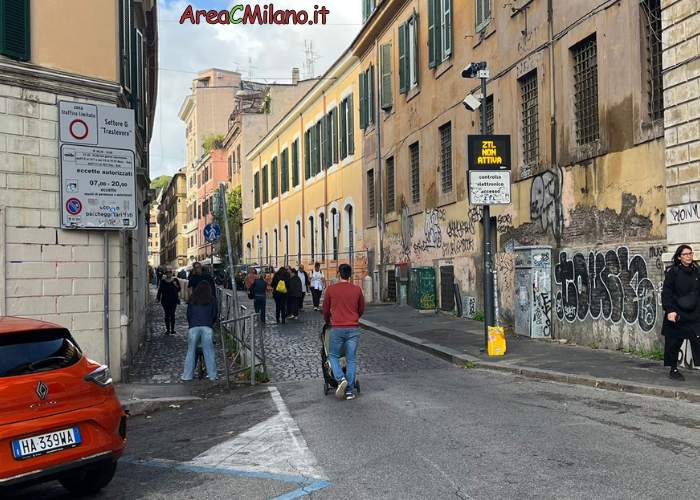
Rome has several restricted zones, the largest being the Centro Storico, which covers most of the city’s historic center. It’s active Monday to Saturday from 6:30 a.m. to 6:00 p.m., and access is limited to residents, taxis, public transport, and authorized vehicles.
Another important area is Trastevere, located just across the Tiber River. Its ZTL is active during the day from 6:30 a.m. to 10:00 a.m., and again at night on weekends, usually from 9:30 p.m. (or 11:00 p.m. in summer) until 3:00 a.m. Access is allowed only for residents with permits, taxis, NCC vehicles, people with disabilities, and motorcycles. Electric vehicles can enter Rome’s ZTL only after registering with the city’s mobility service.
For more information, see our Rome ZTL guide.
Florence – ZTL A and B
Florence’s restricted area covers nearly the entire historic center within the old city walls. The city’s ZTL is divided into sectors (A, B, and others) and operates Monday to Friday from 7:30 a.m. to 8:00 p.m. and Saturday until 4:00 p.m. Only residents, taxis, and authorized vehicles can enter. Tourists staying at hotels within the ZTL can request temporary access through their accommodation, while electric vehicles are often exempt from restrictions.
You can find more details in our Florence ZTL guide.
Bologna – ZTL T and U
Bologna’s ZTL includes most of the historic center inside the city’s ring roads. It’s active daily from 7:00 a.m. to 8:00 p.m., and only residents, deliveries, and authorized vehicles are permitted to enter. Restrictions also depend on emission class, with temporary bans applied during high-pollution periods. Electric and hybrid vehicles can usually enter without restrictions, while others must park outside or obtain a permit.
Read our Bologna ZTL guide to learn more about access, permits, and emission-based restrictions.
Turin – Centrale ZTL
Turin’s main restricted zone, the ZTL Centrale, covers the heart of the city around Via Roma, Via Po, and Corso Vittorio Emanuele II. It’s active Monday to Friday from 7:30 a.m. to 10:30 a.m., targeting morning congestion in the central area.
Residents, electric cars, and some delivery vehicles are allowed entry, while others are restricted during active hours. During specific anti-smog periods, temporary vehicle bans may also apply citywide.
Check our Turin ZTL guide for full information about this limited traffic zone.
Naples – Centro Antico and Chiaia
Naples features several ZTLs within its historic center, the most notable being Centro Antico, active during the day on weekdays, and Chiaia, active mainly in the evenings and weekends to limit nightlife traffic.
Access is reserved for residents, taxis, and authorized vehicles, with certain exemptions for electric and low-emission cars. Visitors staying at hotels in these areas should request temporary authorization before entering.
You can read more in our Naples ZTL guide.
Frequently Asked Questions about ZTLs in Italy
How can I tell if I’m about to enter a ZTL?
Look for a white sign with a red circle and the words Zona Traffico Limitato. If the display says “Varco Attivo,” it means entry is restricted. When it says “Varco Non Attivo,” the zone is open to everyone.
Can electric vehicles enter ZTLs?
It depends on the city. In Milan and Florence, electric cars can enter without restrictions, while in Rome, they must be registered with the city’s mobility service first.
Do ZTLs operate on weekends and holidays?
Some do, especially in cities with nightlife zones like Rome’s Trastevere or Naples’ Chiaia. Always check the local schedule before driving.
What happens if I accidentally enter a ZTL?
Unfortunately, once your car passes the camera, the violation is already recorded, even if you immediately back out or turn around.
Do navigation apps warn about ZTLs?
Some do. Google Maps, Waze, and other GPS apps often show limited traffic zones, but warnings aren’t always reliable. The safest option is to enable “avoid restricted zones” in your settings or use apps like MyCicero or Muoversi a Roma, which display real-time ZTL boundaries.
Are there ZTLs outside major cities?
Yes. Many smaller towns and tourist destinations - like Siena, Pisa, Lucca, and Assisi, also have limited traffic zones protecting their historic centers. Always check before entering these areas, even in smaller cities.
Are ZTL fines sent abroad?
Yes. If you drive a rental car or use your own foreign-registered vehicle, the fine is sent to the vehicle owner or rental company, which may charge an additional processing fee.
How long will it take for the fine to be sent to me if I don’t live in Italy?
It can take anywhere from a few weeks to several months, depending on how your vehicle was registered. For rental cars, fines are usually processed faster because the authorities contact the rental company directly. For privately owned foreign vehicles, fines may take 60–90 days (sometimes longer) to arrive.